Whitening, bonding and veneers
Cosmetic Dentists in Utah
Find cosmetic dentists in Utah who offer whitening, bonding, veneers and full smile makeovers. Compare practices in your city by services and insurance, then get in touch with the office that fits.

Cosmetic dental practices around Utah
7 practices
 Featured
Avenues Dentistry
215 S 1000 E, Salt Lake City, UT 84102
- Cosmetic
- Emergency / Same-Day
- General Dentistry
- +1 more
 Featured
Mountain View Dental Associates
2797 US-89, #201, Pleasant View, UT 84414
- Cosmetic
- Emergency / Same-Day
- General Dentistry
- +1 more
Apex Family & Cosmetic Dentistry
1227 W 9000 S, Suite E, West Jordan, UT 84088
- Cosmetic
- General Dentistry
(801) 677-2739View profile for Apex Family & Cosmetic DentistryBack of the Wasatch Family & Cosmetic Dentistry
380 E 1500 S, #203, Heber City, UT 84032
- Cosmetic
- General Dentistry
Burg Family & Cosmetic Dentsitry
7138 S Highland Dr, Suite 216, Salt Lake City, UT 84121
- Cosmetic
- General Dentistry
- Pediatric
(801) 918-4135View profile for Burg Family & Cosmetic Dentsitry- (801) 465-7966View profile for Payson Family and Cosmetic Dentistry
Pleasant Valley Cosmetic & Laser Dental
5742 Adams Ave Pkwy, Ogden, UT 84405
- Cosmetic
- General Dentistry
(801) 621-3383View profile for Pleasant Valley Cosmetic & Laser Dental
Narrow your search
What cosmetic dentists in Utah can change about a smile
Cosmetic dentistry is about how teeth and gums look: their color, shape, length, spacing and the line they make when you smile. A lot of it overlaps with repair work, because the same crown that rebuilds a cracked molar can also fix a front tooth that never matched its neighbors.
Unlike orthodontics or pediatric dentistry, cosmetic dentistry is not one of the specialties recognized by the American Dental Association. There is no separate residency or license for it, so a general dentist may offer veneers or whitening. Skill comes from extra courses, years of hands-on cases and a good relationship with a dental lab, which is why a dentist’s own before-and-after photos tell you more than a job title.
- Whitening in the chair or with custom trays at home
- Tooth-colored bonding for chips, gaps and worn edges
- Porcelain or composite veneers over the front of the teeth
- All-ceramic crowns for teeth that are broken, heavily filled or badly discolored
- Gum contouring for a gummy smile or an uneven gumline
- Enamel reshaping to smooth small points and uneven lengths
- Replacing old dark fillings with tooth-colored ones
The American Dental Association’s consumer site, MouthHealthy.org, has short guides to whitening, veneers and bonding that are useful reading before a consultation.

A veneer placed over a tooth with untreated decay or gum disease is a nice-looking cover on a problem that keeps growing.
Health first, then appearance
A careful cosmetic dentist starts with an ordinary exam: X-rays, a gum check and a look at how your teeth meet when you bite. Cavities get filled and inflamed gums get treated before any cosmetic work begins. Bite problems matter too, since people who clench or grind can crack porcelain, and some offices will suggest a night guard to protect the new work.
If your teeth are crowded or rotated, ask whether straightening them first would mean less drilling later. Moving teeth into a better position with aligners can turn a plan for eight veneers into whitening and a little bonding.
Whitening and bonding: where most people start
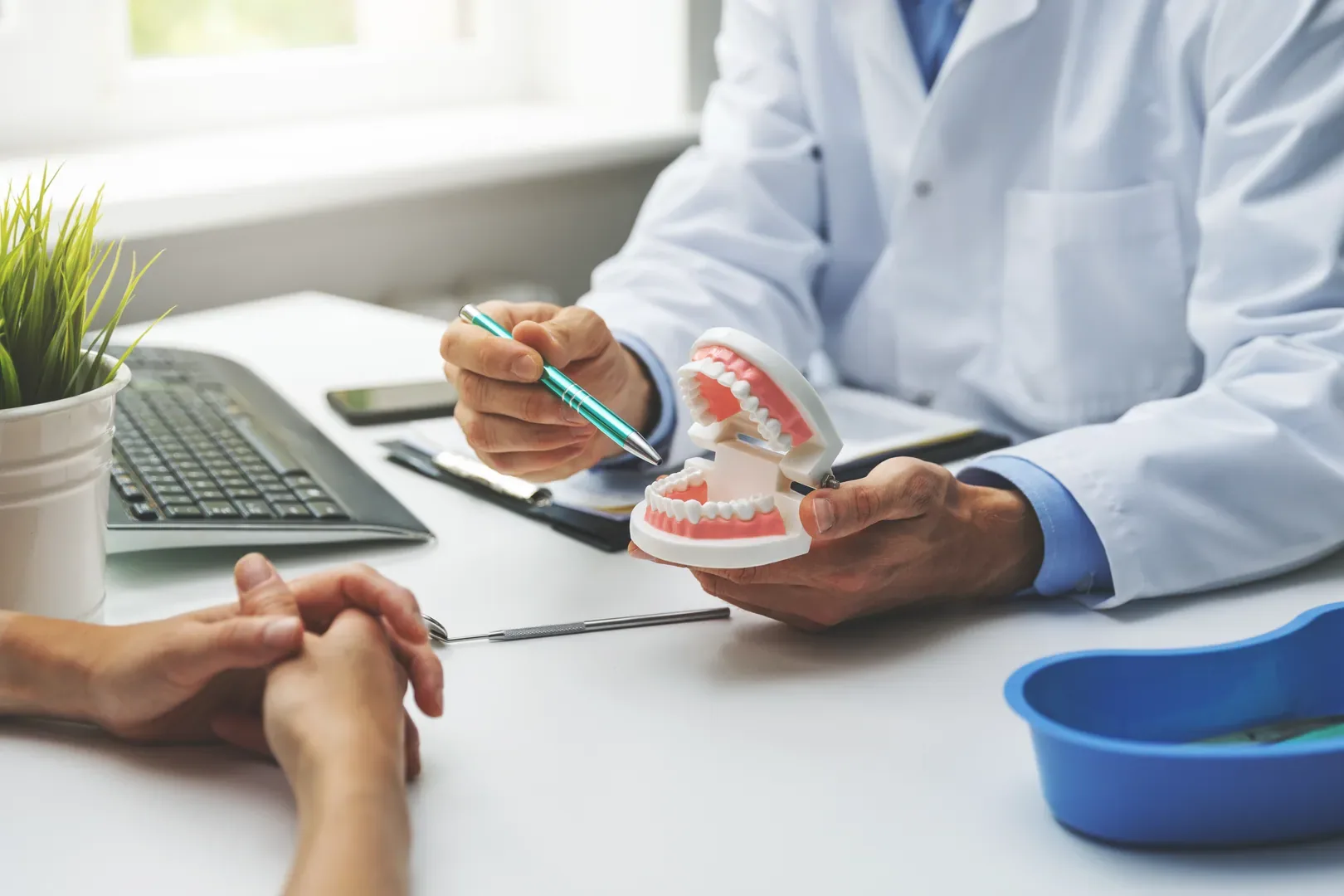
Professional whitening comes in two main forms. In-office whitening uses a stronger peroxide gel painted onto the teeth while the gums are covered with a protective barrier, and it brightens teeth in a single appointment. Take-home whitening uses thin trays made from impressions or a scan of your mouth, filled with a milder gel and worn for a set time each day over a couple of weeks. Many dentists combine the two: a session in the chair, then trays for touch-ups.
Bleaching only works on natural enamel. Crowns, veneers and fillings keep the shade they were made in, so whitening should come before any new front-tooth work, and the restorations are then matched to the brighter color. Temporary sensitivity to cold is the most common side effect.
Bonding is the quick fix for a chipped edge, a small gap or a tooth that is a little too short. The dentist roughens the surface slightly, applies tooth-colored composite resin, shapes it by hand and hardens it with a curing light, often in one visit with no numbing. Composite can pick up stains from coffee and red wine and may chip over the years, but it is easy to polish or repair.
A good mock-up lets you live with your new smile for a few minutes before a single tooth is shaped.
Ask to see the result before it is permanent
For veneers and smile makeovers, many dentists build a preview. A lab or the dentist creates a wax model of the planned teeth, or designs them on screen from photos and a scan, and then copies that design onto your own teeth in temporary resin. You can look at it in a mirror, smile in natural light and speak with it in place.
Changes are cheap at this stage and hard afterward. Bring photos of smiles you like and tell the dentist what bothers you about your own. Lighter is not always better; a shade that suits the whites of your eyes and your skin tone usually looks more natural than the brightest one on the guide.
Veneers, crowns and full smile makeovers
Veneers are thin shells bonded to the front of the teeth. Porcelain veneers are made in a dental lab, hold their color well and usually take two or more visits: one to prepare the teeth and take a scan or impressions, and one to bond the finished shells after you have worn temporaries. Preparing a tooth for porcelain usually removes a thin layer of enamel, and that step cannot be undone. Composite veneers are built directly on the tooth in one sitting, need less enamel removed and are easier to repair, though they tend to stain sooner.
A crown covers the whole visible tooth. It makes more sense than a veneer when a tooth is cracked, weakened by a large filling or after a root canal. Modern all-ceramic crowns can match natural teeth closely, which is why they often appear in cosmetic plans alongside veneers.
A smile makeover is a plan that combines several of these steps in a set order, often over a few months. A typical sequence fixes health problems, moves teeth if needed, whitens, and then places bonding, veneers or crowns in the new shade.
- How much enamel will be removed, and from which teeth
- Whether the plan uses porcelain, composite or a mix
- Which lab makes the veneers or crowns
- What happens if a veneer chips or comes loose
- How many teeth are included, and why that number
Things Utah patients should check
These are the practical questions that decide whether a cosmetic plan works for your budget and your calendar.
Insurance rarely pays for looks alone
Most dental plans treat purely cosmetic work, such as whitening or veneers on healthy teeth, as elective and leave it to you. A crown on a broken tooth or bonding to repair a chip may be partly covered. Ask the office for a written estimate and a pre-treatment check with your plan.
Membership plans and Utah networks
City pages filter by plans including SelectHealth, EMI Health, PEHP, DMBA, Delta Dental, Cigna, MetLife, Utah Medicaid, In-house Membership Plan. An in-house membership plan sometimes includes a discount on whitening, so it is worth asking about if you have no dental insurance.
Time it around big events
Weddings, graduations and family photos often prompt cosmetic work. Porcelain veneers and makeovers need several weeks for lab work and adjustments, so start well before the date. Whitening is usually best finished a week or two ahead so any sensitivity has settled.
Look up the license
Every dentist practicing in the state needs a Utah license, which you can confirm on the Division of Professional Licensing site. Since cosmetic dentistry has no separate license, the portfolio is your best measure of skill.
Gum contouring, and keeping cosmetic work looking good
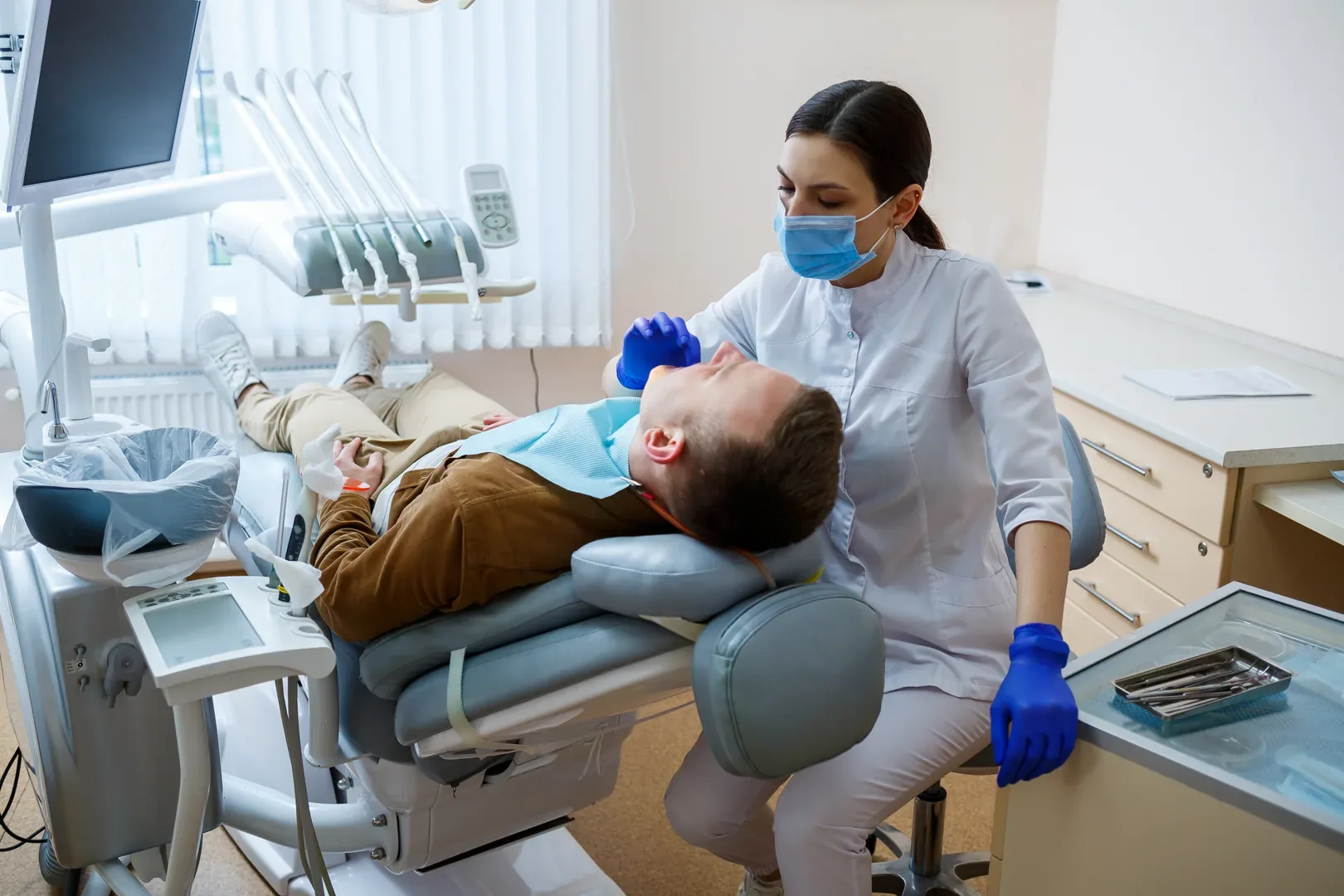
Sometimes the teeth are fine and the gums are the issue. When a lot of gum shows above the upper teeth, or the gumline sits higher on one side, a dentist or periodontist can reshape it with a soft-tissue laser or a scalpel. Some cases need crown lengthening, which also trims a little bone, and that is usually done by a periodontist.
No cosmetic result is permanent. Whitening fades and needs touch-ups. Bonding may need polishing or a repair after several years, and veneers and crowns eventually wear or chip and need replacing. Regular cleanings, a soft brush, nonabrasive toothpaste and a night guard for grinders all help the work last longer.
How to compare cosmetic dentists
Look at the dentist’s own cases
Ask for before-and-after photos of patients the dentist treated personally, ideally with problems like yours. Photos taken from the same angle in the same light are a good sign.
Ask about training and the lab
Find out what continuing education in cosmetic work the dentist has completed and which lab makes their porcelain. Some belong to cosmetic dentistry groups; membership is optional and is not a license.
Request a preview
For veneers or a makeover, ask whether the office offers a wax-up, a digital design or a temporary try-in so you can see the planned shape before treatment.
Get a written plan
A clear plan lists each tooth, the material, the number of visits and what is included if something needs adjusting. Use it to compare two practices on equal terms.
Read reviews about long-term results
Recent reviews tell you about the visit. Reviews from patients a few years out tell you how the work held up and how the office handled a problem.
Common questions about cosmetic dentists in Utah
No. The American Dental Association does not recognize cosmetic dentistry as a specialty, so there is no cosmetic residency or separate license. Cosmetic dentists are general dentists who have focused on this work through extra training and experience. Judge them by their photos, their preview process and their reviews.
We don’t publish fees. Prices depend on the material, the number of teeth, the lab and how much preparation is needed, so ask each practice for a written estimate. Dental insurance usually doesn’t pay for purely cosmetic work, though a plan may cover part of a crown or repair that is needed for health reasons.
Sponsored, Featured and Basic spots are paid; they come first and are always labeled, with all other cosmetic practices after them. Where Google ratings are connected, each group is ranked by a score that weighs the rating against how many reviews it rests on. Without ratings, practices with the most complete profiles appear first, and ties go alphabetically. See how we rank dentists for the full method.
Yes. Each city page has convenience filters for Open Saturdays, Evening Hours, Wheelchair Accessible. Confirm the hours with the office, since schedules change.
No. Best Dentists in Utah lists dental practices and never treats anyone. It does not see patients, recommend a treatment or book appointments for you; you reach the practice directly. Spot an outdated address or hours on a listing? Send a correction through the contact page.
Other dentists that are often part of a smile plan
Find a cosmetic dentist in your city
Choose your city to see cosmetic practices with their hours and accepted plans, and ratings where shown, then contact the one whose work you like best.