
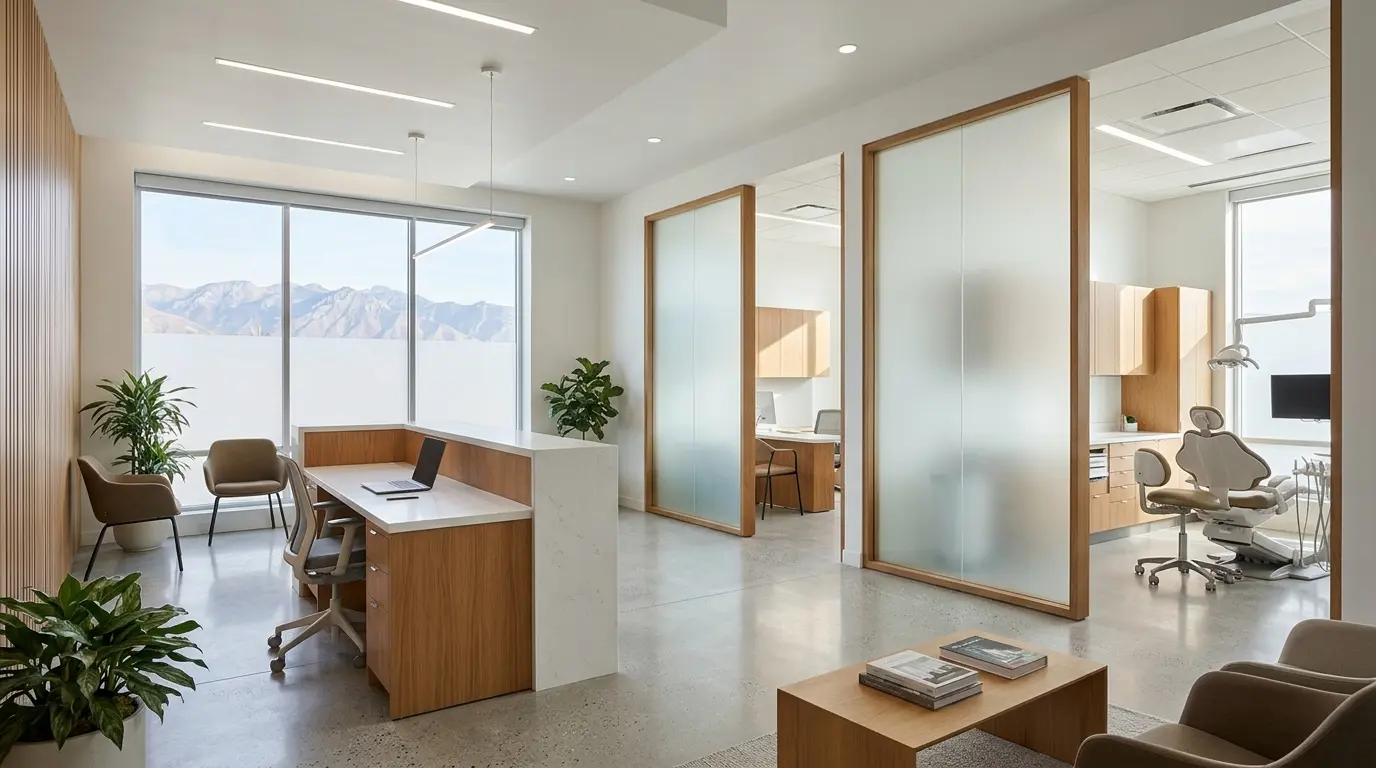
Choosing the right dentist in Utah requires verifying active DOPL licensure, confirming contracted in-network insurance status (versus out-of-network balance billing), evaluating diagnostic tools like digital radiography and CBCT, and demanding itemized CDT-coded treatment plans with periodontal charting to avoid overtreatment.
TL;DR
- Verify state licensing and disciplinary history on the Utah DOPL online registry before scheduling.
- Ask if the dentist is contracted in-network or out-of-network to avoid unexpected balance billing.
- Require written periodontal probe depths exceeding 4 mm before consenting to scaling and root planing.
- Confirm the clinic uses digital radiography, intraoral cameras, and verified autoclave spore testing.
- Check for ACLS certification and state capnography monitoring permits if receiving oral or IV sedation.
Relocating to a new neighborhood along the Wasatch Front or switching dental insurance often leaves patients facing hundreds of local clinic listings with little distinction between them. A glossy lobby and five-star web reviews rarely tell you whether a provider diagnoses conservatively, invests in modern diagnostic tools, or structures billing without unexpected out-of-pocket fees.
Choosing the right clinical home requires balancing insurance network structures, clinical capabilities, sterilization and technology standards, and transparent fee schedules. Utah presents unique regional dynamics, including regional network dominance by carriers like SelectHealth Dental and Delta Dental of Utah, distinct geographic divides between urban Wasatch Front practices and rural basin clinics, and widespread corporate consolidation among neighborhood dental practices.
This practical guide outlines how to evaluate a dental provider before booking your first comprehensive exam, how to verify credentials, what questions to ask office coordinators, and how to spot clinical red flags before you sit in the operatory chair.
Understanding Utah Dental Insurance and Fee Structures
Dental benefit plans operate fundamentally differently from major medical insurance. Rather than protecting against catastrophic loss, dental coverage acts primarily as a defined monetary discount plan with an annual maximum benefit, typically capped between $1,000 and $2,000 per enrollee per calendar year. Understanding whether a provider is a contracted Preferred Provider Organization (PPO) partner or an out-of-network provider directly dictates your financial liability.
When selecting among general dentists in Utah, verify which precise insurance network tier the specific treating clinician participates in. In Utah, major employers and state organizations frequently utilize the Public Employees Health Program (PEHP), SelectHealth Dental, or Delta Dental Premier versus Delta Dental PPO. A clinic may advertise that they accept your insurance carrier, but if they are out-of-network, they are permitted to balance-bill you for the difference between their Usual, Customary, and Reasonable (UCR) fee and your plan’s allowable fee.
Ask the administrative staff for their internal fee schedules for standard preventive and diagnostic codes before booking. For patients without insurance, inquire whether the clinic offers an in-house dental membership plan. These private annual subscriptions bypass commercial insurance middlemen, offering two preventive cleanings, annual exams, digital radiographs, and a 15 to 20 percent discount on restorative procedures for an upfront annual fee.
Rule of thumb: Always ask the dental billing coordinator, “Are you an in-network contracted provider for my specific plan, or do you simply accept my insurance out-of-network?” That single distinction determines whether you receive contractual write-offs or an unexpected balance bill.
Verifying Credentials and Regulatory Compliance in Utah
Competent clinical care begins with active, unencumbered licensure. In Utah, dental professionals are regulated and licensed by the state government, which sets legal standards of practice, continuing education obligations, and controlled substance prescribing protocols.
You can check any practitioner’s public license status, license classification, issue date, and any public disciplinary actions or probationary restrictions through the Utah Division of Professional Licensing (DOPL) online license verification portal. Verifying active licensure takes less than two minutes and confirms whether a doctor holds the appropriate anesthesia permits for sedation dentistry or has faced sanctions for substandard care or billing fraud.
In addition to state licensure, evaluate ongoing professional development and voluntary peer accountability. Clinicians who maintain membership in the American Dental Association (ADA) and the Utah Dental Association adhere to a formal code of ethics. Further designations, such as a Fellowship or Mastership in the Academy of General Dentistry (FAGD or MAGD), demonstrate that a dentist has completed hundreds of accredited continuing education hours and passed rigorous comprehensive examinations beyond baseline dental school requirements.
- Search the provider’s legal name on the Utah DOPL license verification registry.
- Check for active, unencumbered status and inspect any disciplinary stipulations or probation orders.
- Confirm specialized credentials if the dentist performs advanced procedures, such as IV sedation permits or surgical implant training certificates.
- Examine peer associations, including active standing with regional dental societies.
Diagnostic Technology and Standard-of-Care Equipment
Dental equipment is not mere window dressing; modern imaging directly impacts diagnostic accuracy and patient safety. A practice relying on film radiographs or decade-old phosphor plate systems produces lower-resolution images with higher radiation exposure compared to modern digital sensors. When vetting an office, inquire about their primary diagnostic technology.
Cone Beam Computed Tomography (CBCT) provides three-dimensional volumetric images essential for assessing bone density, locating the inferior alveolar nerve before extractions, and guiding implant surgery. While a routine six-month preventive checkup rarely necessitates a 3D scan, having CBCT equipment on site demonstrates that a practice can handle complex surgical evaluations without external referrals. Similarly, intraoral cameras allow clinicians to photograph fractured cusps, marginal leakage around older amalgam restorations, and soft-tissue anomalies, projecting them onto a screen so you can inspect the pathology yourself.
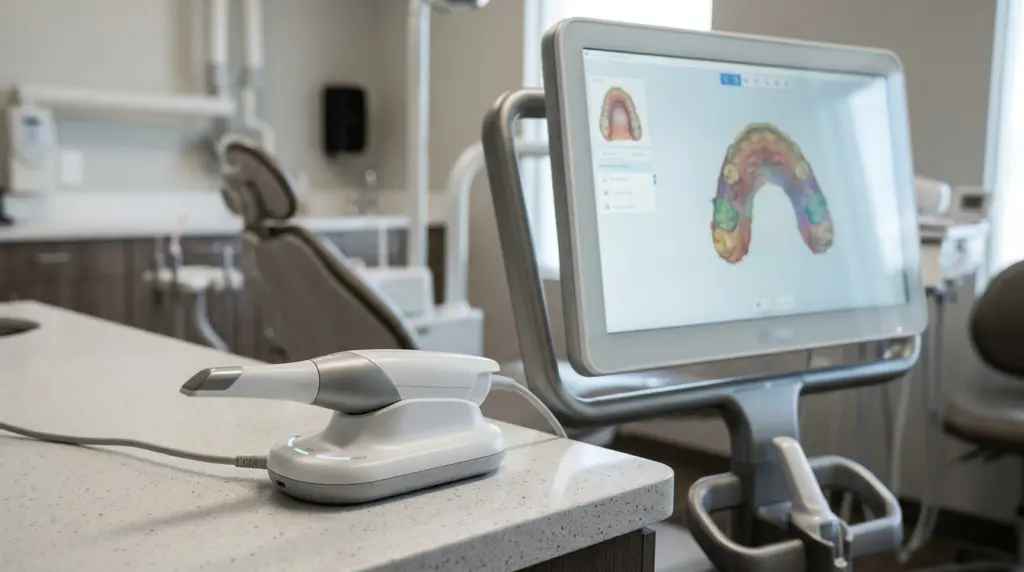
Modern clinics also utilize optical digital impression scanners, eliminating messy alginate impression trays for crowns, nightguards, and clear aligners. Look for practices that prioritize evidence-based sterilization methods as outlined by public health standards from the Utah Department of Health and Human Services (DHHS), including regular biologic spore testing of autoclaves to guarantee instrument sterility between patients.
Comparing Clinical Capabilities: General vs. Specialized Care
A central question when choosing a home practice is whether the clinic operates as a true family dental practice or focuses strictly on adult restorative care. Families often find greater efficiency in scheduling sibling cleanings concurrently, yet pediatric dental needs require different equipment, behavioral techniques, and physical safety standards.
While general practitioners possess the legal scope to treat children, board-certified pediatric dentists in Utah complete two to three additional years of residency focused on childhood airway growth, pulpotomies, interceptive orthodontics, and non-pharmacological behavior guidance. If a family member experiences severe dental phobia, complex root canal anatomy, or impacted third molars, you must consider whether the provider completes these treatments in-house or refers out to endodontists, periodontists, and oral surgeons.
| Feature or Capability | Solo Private Practice | Group / Multi-Doctor Clinic | Corporate DSO Practice |
|---|---|---|---|
| Doctor Continuity | Very high; you see the same dentist at every appointment | Moderate to high; coverage shared among known partners | Variable; associate dentists frequently turn over every 1–3 years |
| Emergency Availability | On-call doctor; limited weekend or evening hours | Shared on-call rotation; flexible weekday coverage | Extended weekday and Saturday scheduling common |
| Specialty Integration | Usually refers complex surgical or endodontic cases out | Often houses in-house specialists on rotating schedules | Varies; multi-specialty regional hubs or outside referral |
| In-Network Insurance Reach | Select PPO networks or fee-for-service / cash only | Broad PPO participation across regional carriers | Maximizes contracted PPO plans and corporate insurance pools |
| Treatment Philosophy | Owner-driven; typically conservative diagnostic thresholds | Collaborative peer reviews between clinical partners | Production-metric targets can incentivize overtreatment |
Find a Verified Utah General Dentist
Best Dentists in Utah curates peer-reviewed, state-licensed dental practices across the Wasatch Front and rural counties. Compare verified credentials, patient satisfaction ratings, and accepted insurance networks without pressure. Browse local family and general practices to book your next comprehensive exam with confidence.
Managing Dental Anxiety and Assessing Sedation Options
Dental fear causes millions of adults to delay routine care until minor decay progresses into severe odontogenic infections. When interviewing prospective dental offices, assess how the clinical team manages patient anxiety. Gentle communication and adequate local anesthesia are standard, but clinical sedation options vary widely by practice certification.
Patients who require pharmacological management should look for qualified sedation dentists in Utah who hold designated state permits for minimal or moderate sedation. Inhalation sedation with nitrous oxide helps relieve mild situational anxiety and wears off within minutes after oxygen administration. Oral conscious sedation involves prescribed benzodiazepines taken prior to the appointment, leaving the patient conscious but deeply relaxed, requiring a designated driver for safe transit.
For extensive rehabilitations, surgical extractions, or severe sensory processing disorders, intravenous (IV) moderate sedation or general anesthesia may be necessary. In Utah, administering deep sedation or general anesthesia requires specialized surgical operatory equipment, continuous pulse oximetry, capnography for end-tidal CO2 monitoring, emergency airway kits, and specialized advanced cardiac life support (ACLS) certifications.
Clinical tip: If an office recommends multi-tooth oral sedation, verify that their treatment operatory uses continuous electronic capnography monitoring alongside pulse oximetry. Capnography provides the earliest warning of respiratory depression, ensuring maximum safety while you are sedated.
How to Audit Treatment Plans and Avoid Overtreatment
One of the most frustrating experiences for a dental patient is visiting a new clinic for a routine cleaning only to receive an aggressive multi-thousand-dollar treatment plan containing multiple crown recommendations and deep cleaning treatments. While early intervention preserves tooth structure, clinical diagnostic philosophy varies widely from watchful waiting to immediate surgical restoration.
Understanding the diagnostic criteria behind recommended procedures protects both your health and your wallet. For instance, scaling and root planing (deep cleaning) is clinically indicated only when active periodontitis is present, verified by radiographic bone loss and periodontal probing depths exceeding 4 millimeters with active bleeding upon probing. If a clinic diagnoses whole-mouth scaling and root planing without providing a detailed, four-to-six-site periodontal probing chart, seek a second opinion.
Similarly, superficial enamel demineralization (incipient caries) that has not breached the dentinoenamel junction can often be arrested or remineralized with prescription 5,000 ppm fluoride dentifrice, diet modifications, and close monitoring. Transparent clinicians willingly show you your digital radiographs, explain the depth of the lesion, outline the risks of waiting versus treating, and never use high-pressure tactics or same-day signing incentives.
- Request a written, itemized treatment proposal containing specific tooth numbers, surfaces, and American Dental Association CDT procedure codes.
- Ask the clinician to show you the specific lesion or fracture on an intraoral photograph or high-resolution radiograph.
- Inquire about the urgency: ask which conditions require immediate stabilization versus which can be safely observed over a six-month interval.
- Obtain a formal second opinion from an independent dental office before committing to extensive cosmetic overhauls or multi-unit crown rehabilitations.
- Clarify warranty policies on lab-fabricated crowns, bridges, and composite restorations regarding fractures or failures within the first 24 to 36 months.
Vetting Office Culture, Hygiene Protocols, and Billing Transparency
The operational culture of a dental clinic often reveals as much about quality of care as the doctor’s credentials. Cleanliness must extend beyond the waiting area into the sterilizing room. High-standard dental practices operate a visible, centralized sterilization alcove where dirty instruments move through an organized workflow: ultrasonic or automated instrument washing, drying, heat-sealed pouch packaging, and steam autoclave sterilization with chemical indicators.
Observe the interactions between the administrative staff, dental hygienists, dental assistants, and the primary dentist. A collaborative environment with low staff turnover signals stable practice management and fair compensation, which translates directly to thorough, unrushed care. When hygienists are pressured to complete cleanings in under 30 minutes, soft tissue diagnostics and patient education are frequently compromised.
Finally, inspect financial transparency prior to rendering clinical care. A reputable office runs insurance eligibility verifications before your visit, provides an estimate of co-pays in writing, clearly explains deductible thresholds, and details patient responsibility. Billing disputes rarely occur when an office adheres to upfront fee disclosures and respects patient autonomy.
Key Takeaways
- Verify your exact plan network tier; contracted PPO participation prevents surprise balance billing, whereas out-of-network providers can charge UCR differences.
- Check the Utah DOPL registry to verify unencumbered practitioner licenses, specialty certifications, and active sedation permits before scheduling.
- Expect modern diagnostic standards, such as digital radiographs, intraoral camera visualization, and documented autoclave spore testing.
- Require an itemized CDT-coded treatment estimate and documented periodontal charting before approving multi-quadrant scaling or extensive restorations.
- Match practice scope to your personal needs, balancing family-friendly scheduling against the specialized needs of pediatrics, advanced surgery, or IV sedation.
Selecting a dental practice establishes a long-term healthcare partnership that protects your systemic health, oral function, and budget. Take time to audit credentials, question diagnostic justifications, and assess chairside communication before committing to treatment. By vetting administrative transparency and clinical standards up front, you secure quality dental care tailored specifically to your family’s needs.
Sources
- Utah Division of Professional Licensing (DOPL) dopl.utah.gov
- American Dental Association (ADA) ada.org
- Utah Department of Health and Human Services (DHHS) dhhs.utah.gov