Dental implants in Utah typically cost between $3,000 and $4,800 for a single complete tooth replacement, with full-arch restorations ranging from $18,000 to $32,000. Treatment requires a multi-phase approach over 3 to 6 months to ensure complete osseointegration, though existing bone resorption or systemic conditions may necessitate preparatory grafting that extends the clinical timeline.
TL;DR
- Single implant costs range from $3,000 to $4,800 in Utah, including the fixture, abutment, and crown.
- Osseointegration requires 12 to 24 weeks of healing before mounting the permanent crown.
- CBCT 3D scans are necessary to verify bone density and map nerve proximity before surgery.
- Smokers and unmanaged diabetics experience significantly higher rates of implant integration failure.
- Implants never decay, but daily plaque removal is essential to prevent peri-implantitis bone loss.
Replacing a missing tooth is more than a cosmetic choice; untreated gaps cause jawbone resorption, bite misalignment, and progressive chewing dysfunction. Modern dental implants act as prosthetic tooth roots, fusing directly with living bone tissue to create a permanent foundation for crowns, bridges, or full arches. Patients along the Wasatch Front frequently encounter inconsistent pricing, fragmented clinical advice, and uncertainty about procedural stages.
Understanding surgical timelines, regional pricing models, and bone preservation requirements eliminates costly surprises before your first consultation. Navigating insurance exclusions and determining whether you require supplemental bone grafting are vital steps in planning your restorative care.
This clinical guide details the implant placement sequence, provides real Utah cost ranges, compares full-arch and single-tooth replacement options, and delivers actionable criteria to vet local implant surgeons.
The Anatomy and Mechanics of Modern Dental Implants
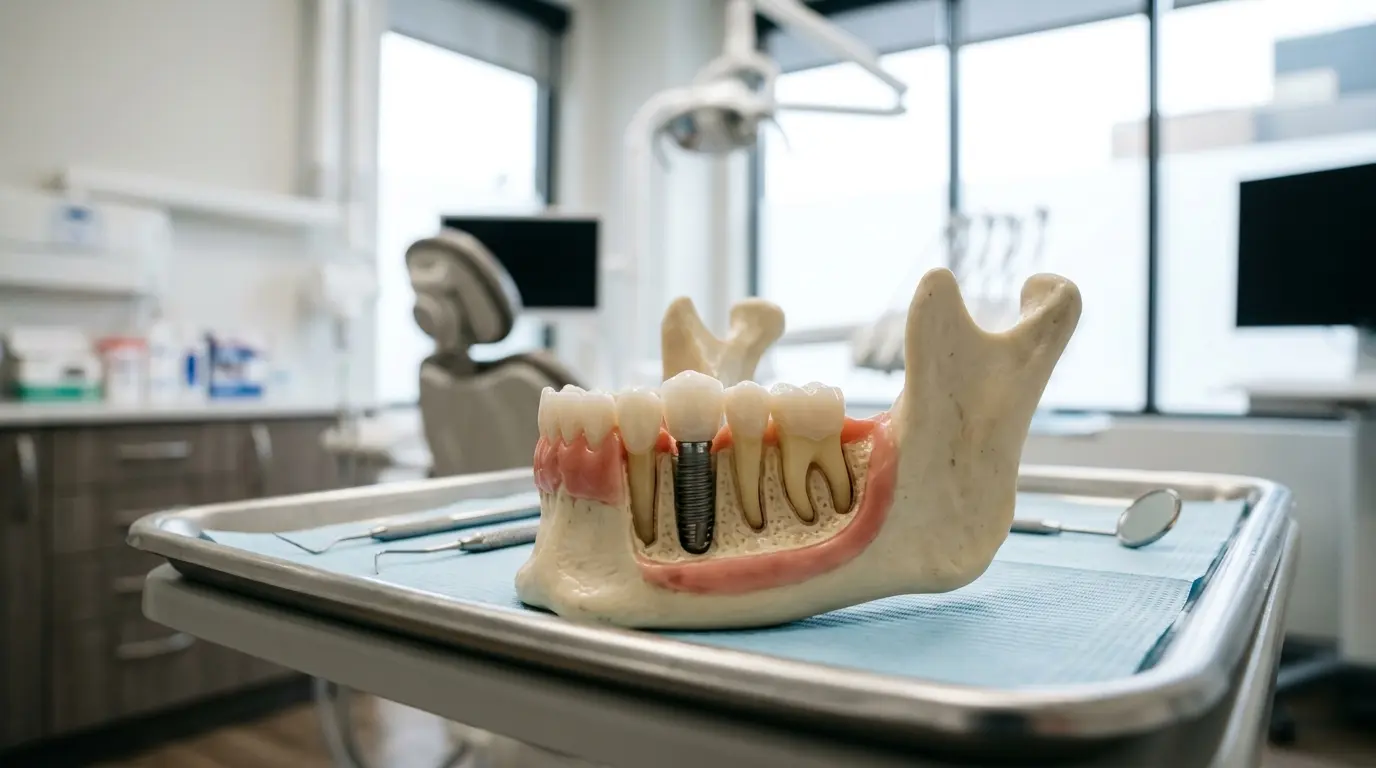
A dental implant is a multi-component prosthetic system designed to reproduce natural tooth biomechanics. The structural foundation relies on an endosteal fixture, typically crafted from medical-grade titanium or zirconia, which a surgeon threads into the alveolar bone of the jaw. Over three to six months, osteoblasts migrate across the fixture’s micro-textured surface, establishing structural integration known as osseointegration.
Once mechanical and biological stability are achieved, the dentist attaches an abutment to the fixture. This post projects through the gingival tissue and secures the definitive prosthesis, which is typically a custom porcelain or zirconia crown. According to the American Academy of Implant Dentistry, titanium remains the clinical gold standard due to its proven biocompatibility and high long-term success rates exceeding 95% across healthy patient populations.
Biomechanical stability depends on adequate bone volume and density. When a natural tooth root is extracted or lost to trauma, the alveolar ridge loses mechanical stimulation, which leads to dimensional bone loss within twelve months. Patients who postpone replacement often require site-preparation procedures like ridge augmentations or sinus elevations before an implant can support occlusal loads.
Rule of thumb: Bone resorption accelerates during the first six months post-extraction. Getting a socket-preservation bone graft immediately upon tooth removal prevents significant ridge collapse and saves thousands on corrective surgeries later.
Single-Tooth vs. Full-Arch Dental Restorations
Restorative dentists evaluate case complexity based on the number of missing teeth, tissue quality, and opposing bite forces. A single missing unit requires an isolated fixture and crown, leaving neighboring natural teeth untouched. This represents a distinct clinical advantage over traditional fixed partial dentures (bridges), which require cutting down healthy adjacent enamel.
Patients experiencing extensive tooth loss or terminal dentition generally choose between implant-retained overdentures and full-arch fixed hybrids, commonly referred to as All-on-4 or All-on-X systems. An implant-retained overdenture uses two to four implants paired with locator attachments, allowing the patient to snap the prosthetic in and out for hygiene. Fixed full-arch hybrids utilize four to six strategically angled implants supporting a permanent zirconia or PMMA screw-retained bridge that only a clinician can remove.
Evaluating which path fits your oral anatomy requires weighing prosthetic maintenance against upfront financial commitments. While single implants present localized surgical risk, full-arch rehabilitation requires comprehensive multidisciplinary planning, detailed occlusal records, and advanced diagnostic imaging.
| Restoration Type | Typical Utah Cost | Implants Required | Primary Advantages | Notable Limitations |
|---|---|---|---|---|
| Single-Tooth Implant | $3,000 – $4,800 | 1 fixture | Preserves adjacent teeth; bone stimulation; 20+ year lifespan | Requires 3–6 months for osseointegration |
| Implant-Supported Bridge | $5,500 – $9,000 | 2 fixtures | Replaces 3–4 teeth without natural abutments; stable bite | Higher hygiene burden beneath pontics |
| Snap-On Overdenture | $7,500 – $14,000 | 2–4 fixtures | Cost-effective full arch; removable for easy cleaning | Nylon clips wear out and require periodic replacement |
| Fixed Full-Arch (All-on-4) | $18,000 – $32,000 per arch | 4–6 fixtures | Non-removable; maximum bite force; permanent aesthetic | Significant surgical scope; higher upfront capital cost |
Utah Dental Implant Pricing: Cost Factors and Fee Breakdown
The total out-of-pocket expense for dental implants in Utah fluctuates significantly between Salt Lake County, Utah County, and rural districts. A single complete implant restoration—encompassing surgical placement, custom abutment, and final zirconia crown—typically ranges from $3,000 to $4,800 in the Salt Lake City metropolitan area. If supplementary site preparation is necessary, total costs shift higher.
Practices that advertise single implants below $1,000 frequently disclose only the surgical fixture fee in fine print, omitting the abutment, crown, surgical guides, and 3D Cone Beam Computed Tomography (CBCT) scans. Transparent treatment estimates itemize every procedure code under the Current Dental Terminology (CDT) standard. Navigating comprehensive care plans requires consulting qualified Dental Implant Dentists who provide all-inclusive pricing before surgery commences.
- Diagnostic Imaging ($250 – $550): High-resolution 3D CBCT scans are mandatory to assess nerve proximity, sinus borders, and bone density.
- Preparatory Bone Grafting ($400 – $1,200): Particulate bone matrix placed into empty sockets or deficient ridges creates sufficient foundation volume.
- Surgical Placement ($1,500 – $2,400): The surgical fixture insertion, sterile protocol, surgical guides, and standard local anesthesia.
- Abutment and Crown ($1,200 – $2,000): Custom CAD/CAM titanium or zirconia abutment paired with a layered ceramic or monolithic zirconia crown.
Pitfall: Beware of quotes offering flat-fee package deals without an initial 3D CBCT scan. Without volumetric imaging, a clinician cannot verify sub-surface bone thickness, raising the risk of nerve impingement or sinus perforation.
The Dental Implant Timeline: Step-by-Step Clinical Process
Implant therapy is a multi-phase treatment designed to safeguard osseointegration rather than a single appointment. Rushing restorative phases before bone consolidation can induce mechanical micro-movement, leading to fibrous encapsulation and fixture failure. Understanding each phase helps manage clinical expectations and daily routines.
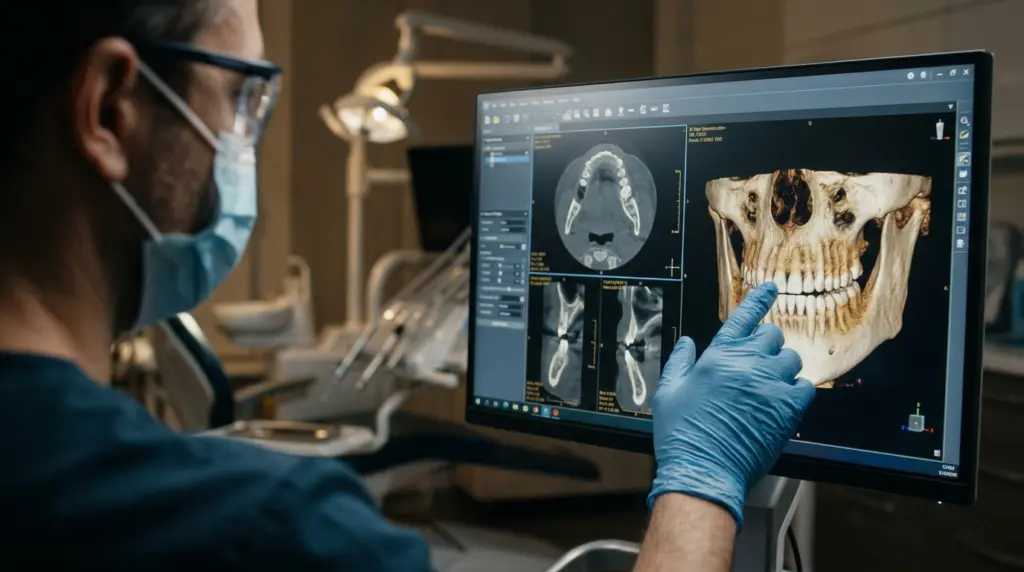
- Comprehensive Diagnostic Workup: The clinician completes clinical charting, digital intraoral scanning, and CBCT radiography. Surgical guides are 3D-printed to plan optimal placement angles relative to the future crown position.
- Surgical Insertion: Under local anesthesia or IV sedation, the surgeon reflects the gingival tissue, creates an osteotomy using precise sequential drills, and threads the titanium fixture into place. A healing cap or temporary crown is placed over the site.
- Osseointegration Period: The patient heals for twelve to twenty-four weeks. During this window, the bone reorganizes around the threaded metal surface. Patients wear temporary removable appliances or retainers if aesthetics are a concern in visible smile zones.
- Abutment Placement and Digital Impressions: Once torque testing confirms stability, the restorative dentist scans the healed gingival collar using an intraoral digital scanner to mill the final prosthesis.
- Prosthetic Seating: The lab-milled crown or bridge is torqued into position onto the abutment, occlusal contacts are adjusted, and screw-access channels are sealed with composite resin.
Complex cases involving sinus floor elevations or extensive block grafting may extend total treatment time to nine or twelve months. Clear clinical communication throughout this timeline guarantees that biological healing dictate operative steps, which minimizes long-term complications.
Find Verified Utah Implant Dentists Near You
Best Dentists in Utah curates thoroughly vetted oral surgeons and restorative clinicians across the state. Compare real patient credentials, technology standards, and transparent clinical services in your city to make an informed choice. Take the uncertainty out of finding qualified dental care today.
Candidacy, Health Conditions, and Bone Grafting Requirements
Not every adult is an immediate candidate for surgical implant placement. Systemic conditions directly influence bone turnover rates, infection resistance, and vascular healing. For instance, according to clinical guidelines from the American Dental Association, unmanaged diabetes significantly elevates the risk of early implant failure due to impaired microvascular circulation and diminished immune response.
Tobacco use and smoking constitute severe relative contraindications. Nicotine constricts peripheral blood vessels, which restricts oxygen delivery to healing alveolar tissues and increases the incidence of peri-implantitis. Patients undergoing active antiresorptive therapy, such as intravenous bisphosphonates for osteoporosis, face rare risks of Medication-Related Osteonecrosis of the Jaw (MRONJ), requiring extensive clinical clearance from their medical team.
For patients who have experienced substantial bone degradation from periodontal disease or longstanding tooth loss, advanced site preparation is standard protocol. When severe anatomical deficits arise along the posterior maxilla or inferior alveolar nerve canal, patients often require coordinated care through experienced Oral Surgeons who specialize in sinus lifts, nerve lateralization, and major ridge augmentation.
Managing Dental Anxiety and Surgical Discomfort
Fear of surgical pain remains the single most common reason patients postpone missing tooth replacement. While the idea of drilling into jawbone sounds daunting, bone tissue contains virtually no sensory nerve endings. Discomfort during surgical placement is typically milder than that of a routine surgical tooth extraction, with most patients requiring only over-the-counter anti-inflammatories like ibuprofen within 48 hours post-op.
Patients exhibiting severe situational anxiety, hyperactive gag reflexes, or those undergoing extensive full-arch osteotomies can opt for deeper management strategies. Discussing sedation protocols with certified Sedation Dentists allows patients to select between oral conscious sedation, nitrous oxide, and full IV moderate sedation administered by licensed providers.
Proper post-operative hygiene prevents acute soft-tissue inflammation around healing abutments. Chlorhexidine rinses, soft-bristle brushes, and strict adherence to a non-chewing diet on the surgical site during early cellular organization allow bone remodeling to advance uninterrupted.
Long-Term Maintenance and Preventing Peri-Implantitis
Although titanium and ceramic restorations are impervious to dental caries, the surrounding periodontal structures remain vulnerable to biological complications. Peri-implant mucositis is a reversible inflammatory lesion limited to the soft mucosal tissue surrounding an implant. Left unaddressed, it progresses into peri-implantitis, a destructive inflammatory condition that resorbs supporting bone and threatens implant stability.
Preventing peri-implantitis requires consistent home hygiene combined with specialized dental cleanings. Standard metal scalers can scratch titanium abutments, creating rough surfaces that harbor pathogenic plaque biofilm. Dental hygienists use specialized ultrasonic tips or medical-grade plastic and titanium hand instruments to debride margins safely without compromising surface finish.
According to researchers at the American Academy of Periodontology, patients with a history of treated periodontitis face elevated risks of peri-implant complications and require maintenance cleanings at three- to four-month intervals. Daily interdental cleaning using water flossers, interproximal brushes coated in plastic, and soft floss preserves the mucosal seal that shields underlying bone.
Key Takeaways
- Dental implants maintain average 20-year success rates exceeding 95% when placed in clean, non-smoking, systemically healthy oral environments.
- Single-tooth implant restorations in Utah typically range from $3,000 to $4,800, covering imaging, surgical placement, custom abutment, and crown.
- Socket preservation grafts completed at the time of tooth extraction prevent vertical and horizontal ridge collapse, saving time and money on future surgeries.
- Osseointegration takes roughly 12 to 24 weeks; cutting healing time short increases micro-motion and fixture failure risks.
- Implants cannot develop biological cavities, but poor plaque removal can cause peri-implantitis and catastrophic bone loss around the fixture.
Next Steps for Restoring Your Smile
Replacing broken, decayed, or missing teeth requires careful planning rather than quick decisions. Start by scheduling an initial diagnostic consultation that incorporates high-definition 3D CBCT scanning to assess bone height, density, and local anatomy.
Request an itemized written estimate identifying each procedural stage and CDT code to protect yourself against hidden expenses. Once your clinical records are clear, you can confidently choose the surgical approach, sedation level, and restoration schedule that best restores your smile’s long-term function.
Sources
- American Academy of Implant Dentistry aaid-implant.org
- American Dental Association ada.org
- American Academy of Periodontology perio.org